This shoudl relate to the Why Hiring Data Analysts Is Still Broken and AI Broke Your Hiring Signals posts I published in the last coupole of days (I don't know how many, time is an irrelevant social construct I deemed unnecessary around March 2020)
When people talk about getting better at data analysis, they usually mean practice.
More exercises, more datasets, more problems to solve.
On the surface, that makes sense.
Practice should lead to improvement.
The problem is that most of this practice doesn’t resemble real work.
Typical exercises are clean, structured, and predictable. The question is clearly defined. The dataset is tidy.
There’s an implicit understanding that there is a “correct” answer waiting at the end. If you follow the right steps, you’ll get there.
That’s not how real analysis works.
In reality, the hardest part is not executing steps.
It’s figuring out which steps are worth taking in the first place.
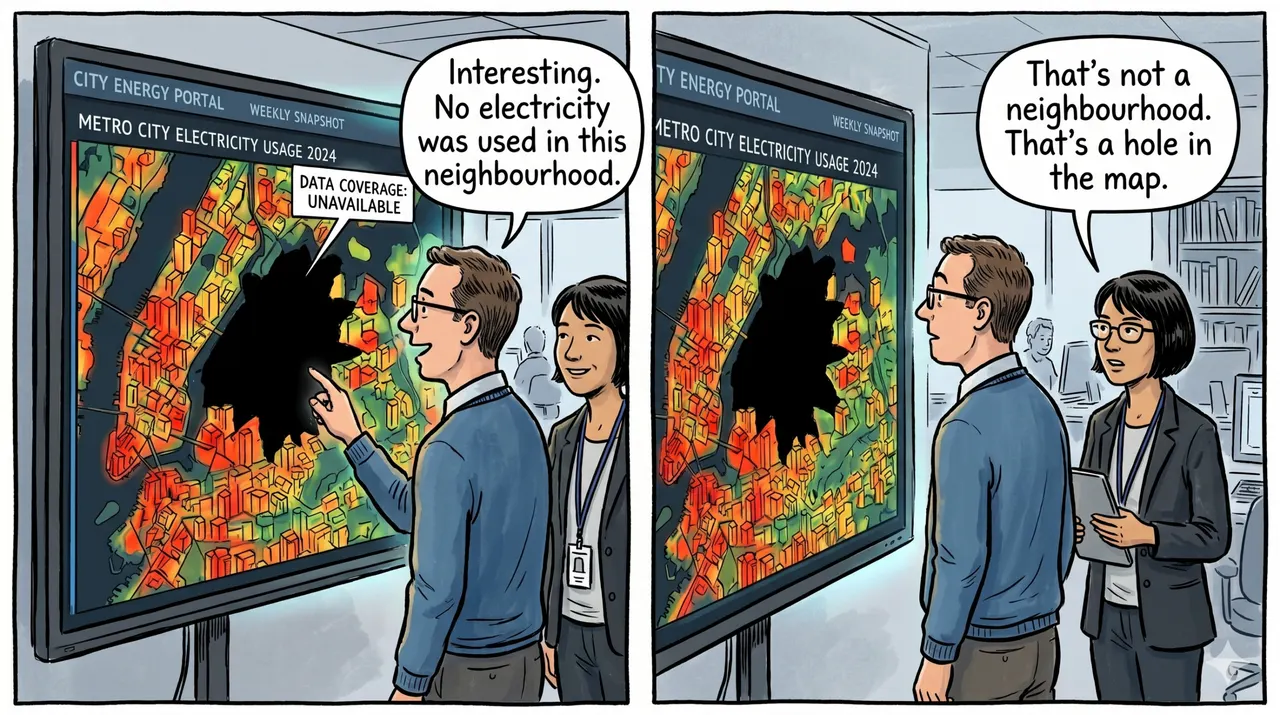
The question is often vague, the data is incomplete or messy, there are multiple reasonable directions, and no guarantee that any of them will lead to a clean conclusion.
So when someone moves from practice into actual work, the experience can feel disorienting.
Almost never because they lack ability, but because they’ve been training in an environment that optimizes for the wrong things.
It’s a bit like being dropped into the middle of a Dungeons & Dragons campaign without context. You’ve learned how the mechanics work, but suddenly you’re expected to make decisions without knowing the full story, the stakes, or even the goal.
Most practice platforms unintentionally reinforce this gap. They reward correctness, speed, and completion. They encourage people to move efficiently from question to answer. And over time, that creates a habit: look for the shortest path to something that seems right.
But real analysis doesn’t reward speed nearly as much as it rewards judgment.
It rewards knowing when to slow down. When to question the framing. When to explore something that might not lead anywhere, just to make sure you’re not missing something important.
Without that, you end up with analysts who are very good at executing instructions, but struggle when the instructions are unclear. They can follow a path, but they hesitate when they need to create one (you know, Analysis Paralysis, wink wink, nudge nudge).
The result is work that looks active but lacks depth. A lot is happening, but not much is actually being discovered. It has a certain Family Guy quality to it — disconnected moments that are individually fine, but don’t really build toward something meaningful.
Fixing this doesn’t require more practice. It requires different practice.
Practice that includes ambiguity. Practice that forces trade-offs. Practice where the outcome isn’t predetermined, and the evaluation focuses on how you got there, not just where you landed.
Some platforms are starting to move in that direction. (like XP Lab, which, full disclosure is something I'm developing) But the broader point stands regardless of the tool.
If you want better analysts, you have to train the thing that actually matters.
And that’s not execution.
It’s thinking.